


New here? Begin with ✨Welcome Home to Sanctuary✨ — a gentle place to find your bearings and a sense of homecoming.
Sanctuary follows the Celtic calendar, with an ✨Invitation✨ —like this one—at the start of the season and a mid-season ✨Pause✨ offered as gentle calls to come home to yourself.
Remembering the Rhythm
O body swayed to music,
O brightening glance,
How can we know the dancer from the dance?
— William Butler Yeats
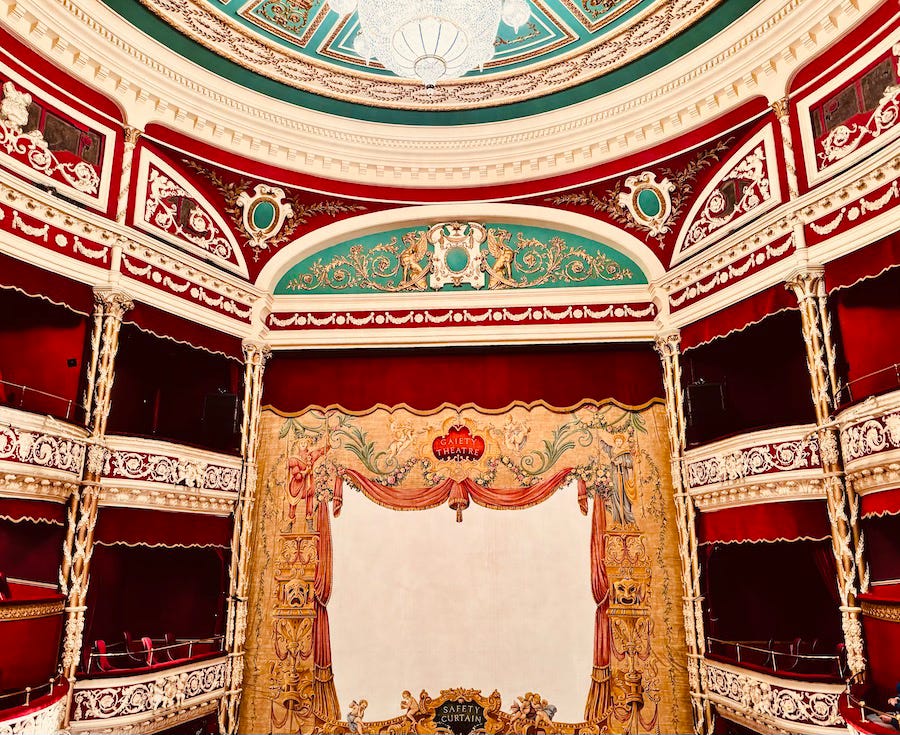
We settle into our seats, the warmth of the theatre and the soft rustle of coats around us slowly fading as the lights dim. The red velvet curtains of the Gaiety Theatre draw back and the hush of the crowd deepens. The sound of a fiddle and the quick strike of feet rise together, like a songbird in the dark.
My husband and I are here in Dublin for the 25th-anniversary performance of Riverdance, a rich celebration of Irish story and identity told through movement and music.
It unfolds as a sweeping story of land and people, carried through Irish sound and step dance, interwoven with American tap dance and Andalusian flamenco.
Tap. Treble. Treble. Tap. Tap.
A pattern my body knows before my mind can name it.
I lean forward, remembering my own days on stage as an Irish step dancer—feis competitions, céilí dances, and St. Patrick’s Day celebrations. There, too, are the memories that accompany those days: a bowl of Irish stew in my belly, because a warm welcome with food is, of course, how the Irish thank you for your dancing.
I feel it in my body: head lifted, arms drawn towards the earth, feet angled outward, and my heart as fluid as the river—waiting for the moment when my soul leaps and my body follows. My feet tracing the steps that I know by heart.
In this remembering of rhythm—this feeling of being at home in my body—my heart comes home.
Six months later, as I write this, the pulse of that performance still moves through me. From that embodied remembering, a question begins to take shape: what happens once we’ve lost our rhythm—and what can help us remember it again?
This season arrives as an invitation to slow down and find your rhythm—one that honours who you truly are in the moments when you feel the most tender, joyful or whole.
The Season of Imbolc
This season opens with Imbolc, the fire festival of February 1, when light begins its return and the first hints of spring begin to stir beneath the dark. It rests at the midpoint between the winter solstice and the spring equinox, a moment held between what has been and what is yet to come.
Imbolc is not a season of arrival, but of becoming. Its name means in the womb, inviting trust in what is quietly forming, unseen but alive beneath the surface. Like Artos the bear, whom we met in last season’s Invitation, transformation begins as we stir from winter sleep, gathering itself in the dark long before it can be seen.
Imbolc does not ask us to leap forward. It invites us to remain with what is forming, to listen rather than to rush and to allow the heart to find its way home again.
When I was learning to dance, my teacher taught us to lift our feet for the silence it creates. Like a rest note in music, this silence is what gives the sound that follows its weight and meaning. Imbolc teaches us this same rhythm, inviting us to trust the silence between steps.
It is in this listening that rhythm returns—not as something we create, but as something we remember.
We begin to know the dancer from the dance by learning when to be silent, when to move, and when to listen.
Keeper of Rhythm
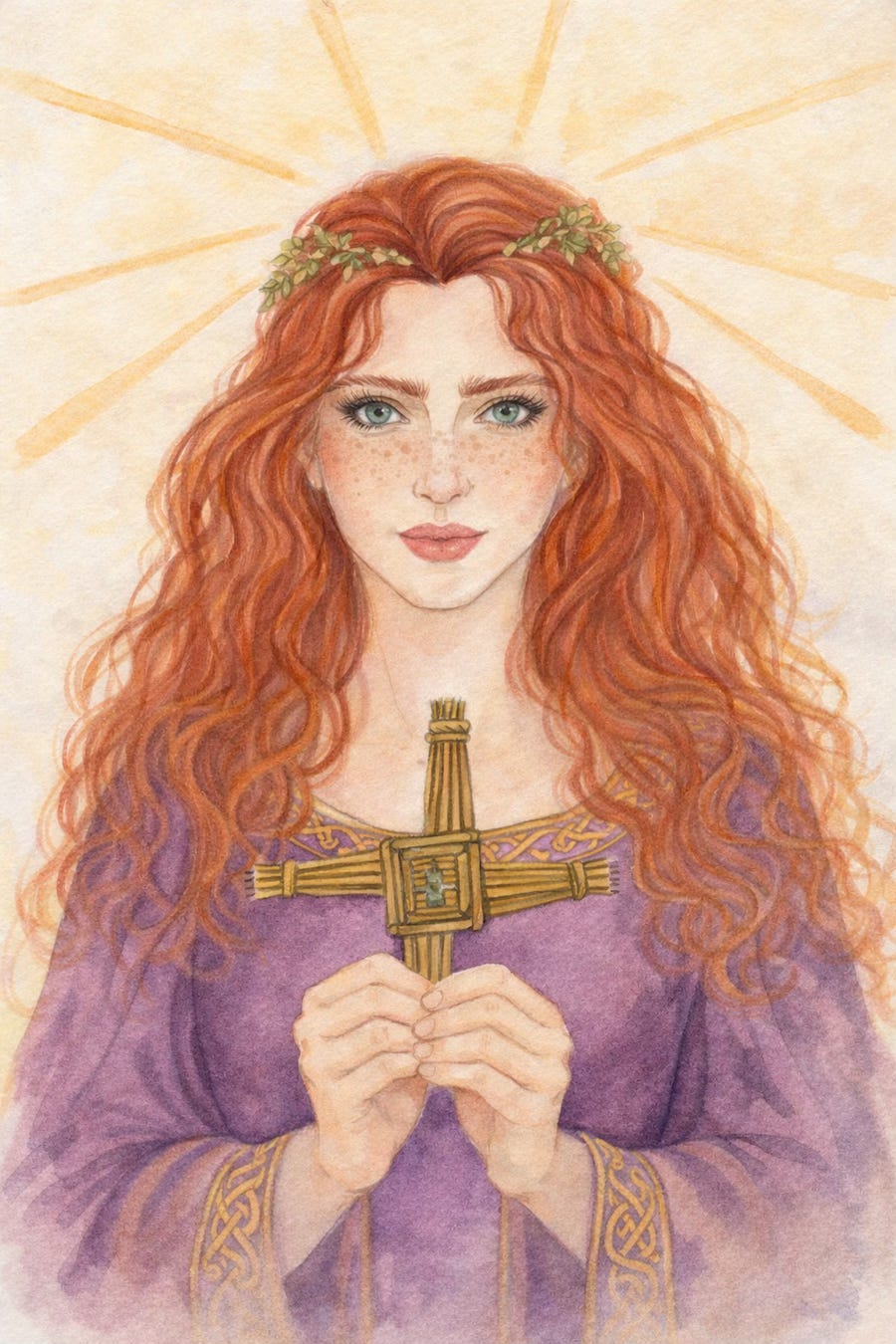
Imbolc is closely tied to Brigit—Celtic goddess and saint, long associated with poets, singers, and those who work with voice, story, and creative fire. She is a keeper of living rhythm: the cadence of words spoken aloud, the movement of breath and song, the shaping of meaning through sound.
In Celtic tradition, poetry was not written to be read silently, but sung or chanted—breathed into the world as a carrier of power and presence (Hopman, 2024). Voice was understood as an act of creation. When a voice is silenced, something essential is withheld; when it is freed, movement lives within us once again.
Reflective Practice
adapted from Tending Brigid’s Flame (2020)
Celtic tradition names three strains of music, each held by Brigit: rest (Suantraighe), sorrow (Goltraighe), and joy (Geantraighe). Together, they form a complete rhythm of living. Each strain carries its own wisdom.
This season, you might listen for the music moving within you:
Is it a rhythm of rest, sorrow, or joy?
Where is it asking you to slow down and listen more closely?
What would it mean to tend your own rhythm with care?
Keeper of the Hearth
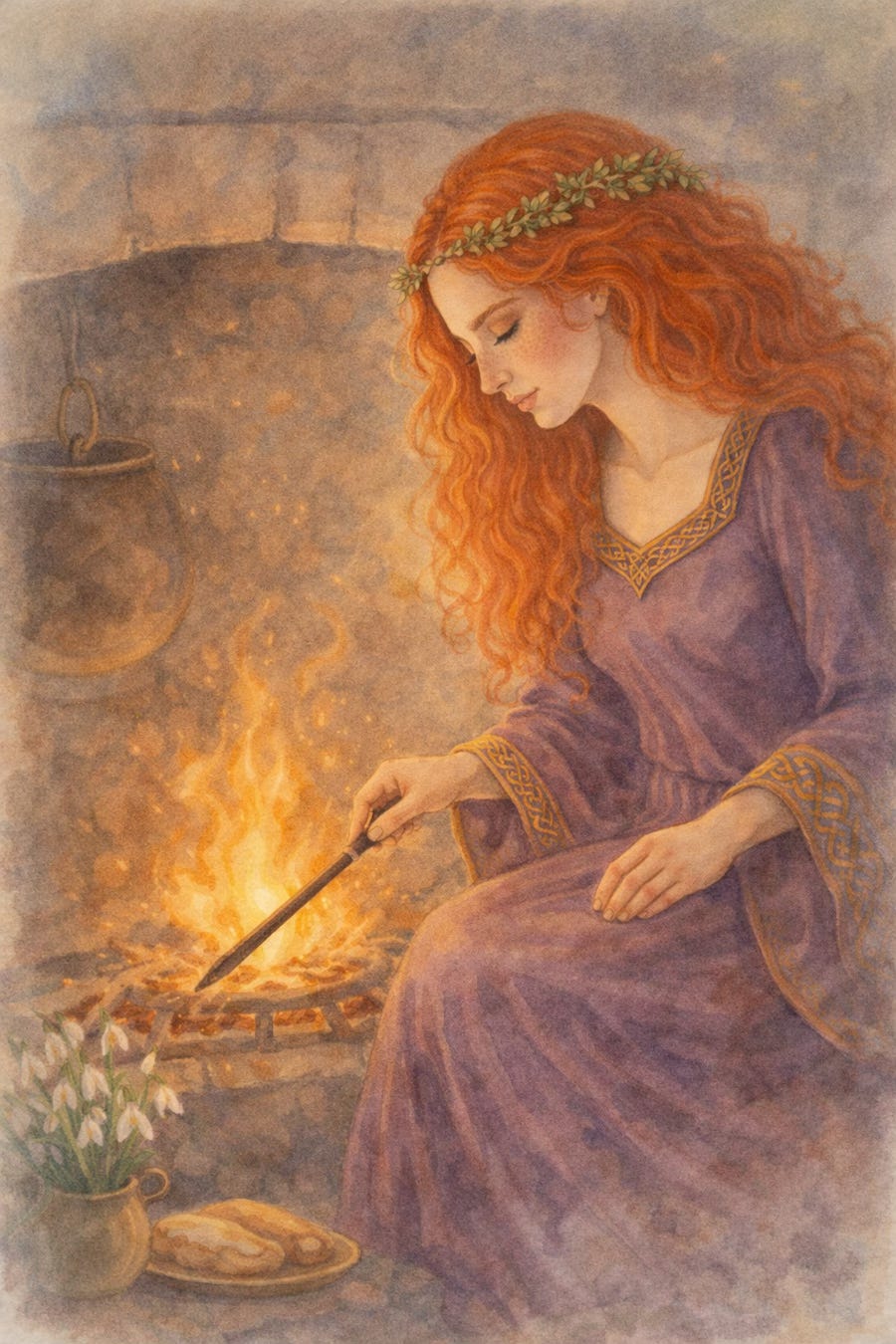
Brigit is not only the keeper of words and rhythm, but also the keeper of the hearth. For the Celts, the hearth stood at the centre of the home—the quiet heart of daily life. Even in homes without a wood stove or fireplace, the hearth remains: the places where you gather with family or friends, in the kitchen or around the coffee table, the spaces where life is warmed and witnessed.
Brigit reminds you that you are the keeper of your own hearth. You decide what feeds your inner fire and what drains it. Over time, you learn when shared warmth sustains you—and when your fire needs solitude, rest, or quiet in order to rekindle.
Insight arrives in this season the same way fire does—not all at once, but gradually: as a spark, then as an ember, as something already glowing, noticed only when we slow down enough to see it.
How to Make Fire
Fire does not begin as a blaze,
and neither do we.
It begins as a spark—
kindling, coming into being.
It glows as an ember,
tended by its keeper.
It brightens into a hearth,
gathered around, fed by many.
It rises into flame,
crackling, alive,
casting its light out into the dark.
The crackle softens.
The light draws inward.
What was loud becomes quiet.
The soul’s journey is felt.
For fire is not light alone.
It settles into embers,
holding warmth close,
as it descends into darkness.
Daily Tending
Brigit teaches us to listen to the rhythm of the season by slowing down and pausing with intention.
We tend to our inner hearths by noticing, over time, what nourishes and sustains us—and what quietly depletes us. Just as a fire needs air and fuel to burn well, the body needs rhythm to remain steady. When our days are rushed or overridden—when hormones are depleted or in excess, when circadian rhythms are disrupted, when the needs of others always come before our own—our inner fire begins to exhaust itself.
Often, there are signs. We react more quickly. We worry more often. We resist rest. Listening to the rhythm of the season asks us to pause long enough to notice when the fire is beginning to burn low. Without noticing—tending the fire with enough care and fuel—it eventually burns out.
It is through daily acts of listening, resting, and returning that we begin to notice our own rhythms. The Irish poet and philosopher John O’Donohue speaks to this gentle attentiveness, reminding us: “If you attend to yourself and seek to come into your own presence, you will find exactly the right rhythm for your life.”
It is in the present moment—when we make tea, stir the soup, sweep the floor, or hang the laundry to dry—that Brigit accompanies us. She is present, too, in quieter forms of tending—when you leave a piece of writing unfinished, trusting that the words will arrive when they are ready. These acts of care, when met with attention, keep the inner fire steady, offering the mind a place to rest while the body continues to move.
This is the work of everyday tending, like a dancer listening for the song’s rhythm—learning when to move and when to rest.
Weaving the Rhythm
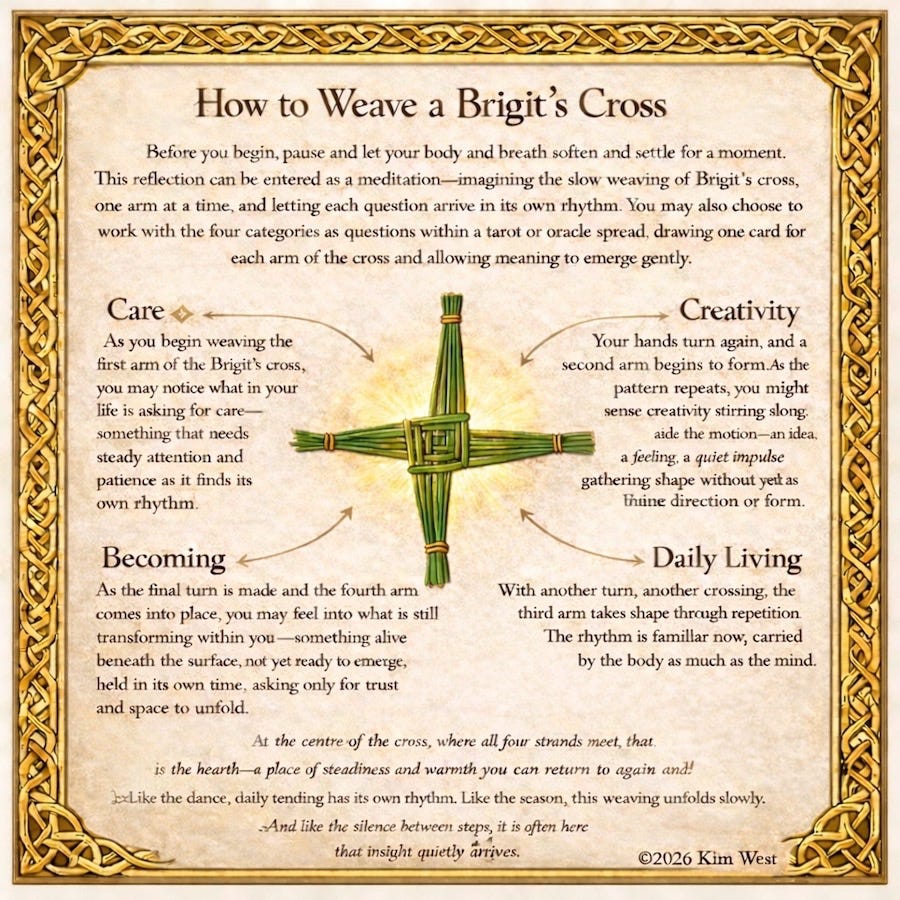
At Imbolc, the work of tending is represented through the weaving of a Brigit’s cross. This traditional form reflects the same rhythm named throughout the season—patient, attentive, and grounded in the body.
What follows is a reflective meditation shaped by that rhythm. Drawing on image, imagination, and gentle attention, this practice invites you to move slowly through a series of questions—one at a time—allowing insight to arrive as it will.
Brigit’s Cross Meditation
Before you begin, pause and let your body and breath settle.
Begin with the image of Brigit’s cross, woven one arm at a time around a steady centre. You might be weaving with your hands, imagining the movement, or simply holding the shape of the cross in mind as you move through the reflection.
Let each arm of the cross arrive in its own time. There’s no need to search for meaning or direction. Just notice what draws your attention, what feels steady, and what is quietly changing.
If you work with tarot or oracle cards, they can sit alongside the practice in a gentle way. You might draw one card for each arm of the cross, letting the images on the cards keep you company as the questions unfold. Whether through cards, imagination, or the movement of your hands, each arm of the cross offers its own place to pause and reflect.
Care
As you begin with the first arm, notice what in your life is asking for care—something that needs your attention as it continues to take shape
Creativity
With the second arm, notice where creativity is stirring—an idea, impulse, or way of seeing that does not yet require direction.
Daily Living
As the third arm takes shape, bring awareness to the ordinary movements and patterns that make up your days.
Becoming
With the final arm, sense what is still unfolding—something not yet ready to be named, but present all the same.
Hearth
At the centre of the cross, where the four arms meet, is the hearth—a place of steadiness you can return to.
Living the Season
To live the season is to carry it with you. These affirmations are gentle companions for tending your inner fire and resetting your rhythm in everyday moments—such as when you’re cooking, writing, walking, or pausing at a doorway.
Brigit’s Affirmations
Care
I am learning to slow down enough to listen.
I am finding my rhythm through small acts of care.
Creativity
I am choosing spaciousness over busyness.
I am allowing what I am creating to remain unfinished.
Daily Living
I am learning to slow down and pivot.
I am listening for the silence between steps.
Becoming
I am letting insight arrive in its own time.
I am surrendering the need to rush what is still transforming.
Hearth
I trust what remains unfinished will return when it is ready.
I am changing, not all at once, but steadily.
Let these affirmations remind you that becoming unfolds gradually, and that Imbolc is not the moment of transformation itself, but its first quiet stirring.
When we listen closely enough—to the silence between steps, to the rhythm tended at the hearth of our lives—the heart remembers the way home.
🌙✨Sanctuary is a reader-supported publication. By subscribing, you’ll receive seasonal reflections rooted in Celtic wisdom and story, guiding you home to yourself, season by season.
If you’re longing to move beyond reflection and into lived practice, my paid subscription ✨Linger✨ offers a guided journey for carrying the season’s wisdom into everyday life.
On the Bookshelf
Books and writings that kept me quiet company as I wrote — steady companions for anyone wishing to walk further with these ideas:
John O’Donohue, Eternal Echoes: Exploring Our Yearning to Belong (Bantam Press, 1998).
Lunaea Weatherstone, Tending Brigid’s Flame (Llewellyn Publications, 2020).
Ellen Evert Hopman, Celtic Druidry: Rituals, Techniques, & Magical Practices (Destiny Books, 2024).
On the Record Player
Songs that wove themselves into the writing:
Reel Around the Sun & Firedance — Riverdance 25th Anniversary: Music From the Show (Suantraighe — the music of rest) —Rhythms from the Riverdance soundtrack. Listen for the silence between steps—the lift that gives the sound its meaning—as a reminder of the value of pausing in your everyday life.
I See Fire — Celtic Woman (Goltraighe — the music of sorrow) — A song that lets feeling move through breath and silence, without searching for answers or resolution. It keeps sorrow company, allowing what is heavy to be felt and tended in its own time.
Surrender — Birdy (Geantraighe — the music of joy) —Joy arrives quietly—an easing into what is already present. A soft warmth that reminds us of Imbolc’s rhythm: that becoming does not need to be rushed.
🌙✨Music is part of Sanctuary’s wider world. You’ll find my Spotify profile as a point of connection, while seasonal playlists are for my paid circle, ✨Linger.✨

🌙✨If something here has kindled a small lantern for you, you’re warmly invited to share its light with others who may be finding their own way home.🌙✨

What a beautiful reflection on the power of rhythm and memory! Your experience at the Riverdance performance is so vividly captured, and it’s wonderful how the music and dance evoke such deep emotions and memories. It’s a reminder of how important it is to slow down and reconnect with our own rhythms. Thank you for sharing this heartfelt story!
“Like a rest note in music, that silence gives meaning to what follows. Imbolc asks us to trust the silence between steps.”
This stirs a curiosity within. Ive been sitting with stillness and silence. The liminal space between creations.
Feeling less drawn to read my books, as I normally do. I can’t quite get myself to move, and yet I haven’t been listening enough.
More focused on the noise than the silence. I’m wondering what will happen when I sit with this tonight.
Thank you for the new perspective. ✨